The History
Two centuries on Silver Creeks
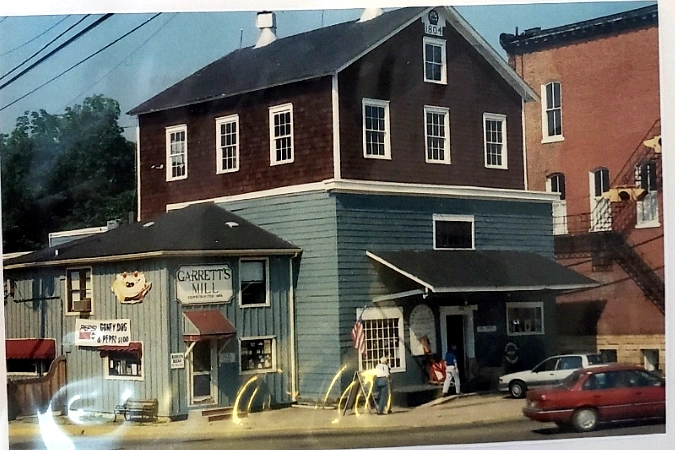
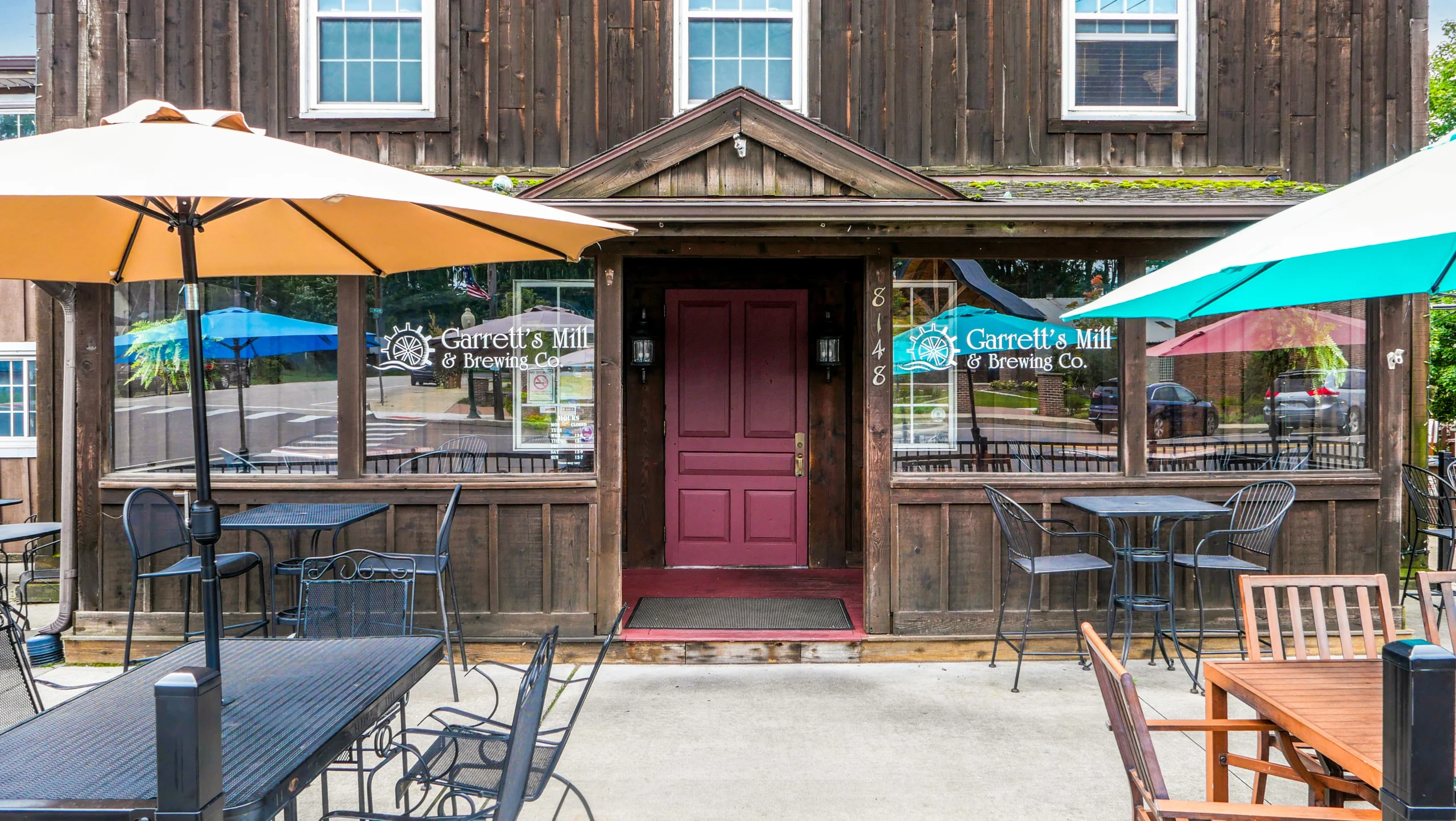
The building at 8148 Main Street has been a grist mill, a flour brand, a fire scene, a family dream, and a Main Street landmark. Massive original timbers, mill features, and artifacts are still here.
1804
The mill site dates to 1804
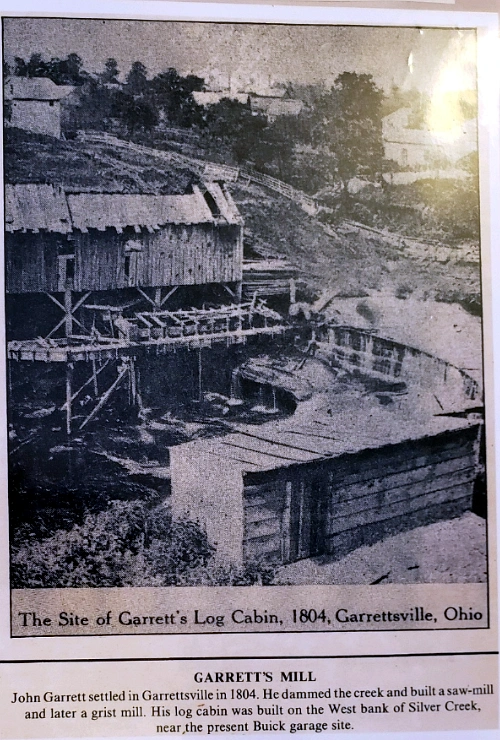
Silver Creek got its name in 1802, when a Hiram pioneer named Mason Tilden looked out over the clear water and called it a “silver creek.” Two years later Col. John Garrett bought 300 acres of Western Reserve wilderness for $1,313, found the easiest place on the creek to build a dam, and put up the two structures every frontier settlement needed: a sawmill and a grist mill. The village that grew up around them took his name.
The water that turned Garrett’s wheel is the same water that spills over the falls behind the restaurant, the deck, and the ice cream shop today.
The Mill
Powered by the same creek that runs behind it today
Silver Creek is the reason this building exists where it does. The water that once turned the mill’s wheel is the same water that now spills over the falls behind the restaurant, the deck, and the ice cream shop.
Massive original beams and mill features remain throughout the property, preserved through every era the building has passed through. Original artifacts from its milling days are still on view for anyone who tours the space.
How Garrett's Mill became today's restaurant, brewery, and waterfall destination
The mill is born
John Garrett settles on the west bank of Silver Creek, dams it, and builds a sawmill and then a grist mill. Local legend says he died in January 1806, on the very day the mill was scheduled to open. His widow, her three sons, and partner Abraham Dyson carried on.
Rebuilt by the family
Edwin Atwood, husband of Garrett’s daughter Elizabeth, rebuilds the mill with partner Leman Ferry. Through the middle of the century it operates as Atwood, Perry Jr. & Davis, and later Atwood & Irwin.
The Vanderslice era
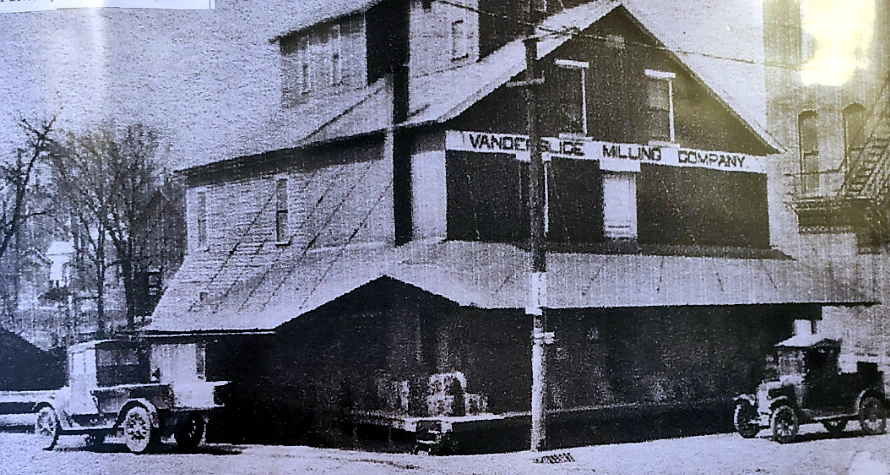
The Vanderslice brothers take over, and John Van Rensselaer Vanderslice, remembered as a “milling genius,” runs it for decades. Around 1900 he invites every able bodied man and boy in Garrettsville to help him replace the old plank dam with concrete, a race against the water that the town still talked about generations later. His son in law Bill Scott joins in 1912 and replaces the water wheel with turbines around 1918. Farmers line up outside with grain to be ground.
Fire
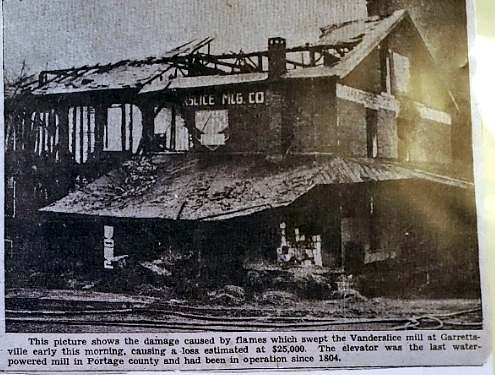
On November 1, 1939, a 23 year old farmhand set fire to the mill to get revenge on a farmer who had grain stored inside. The blaze gutted the Vanderslice Milling Company, the last water powered mill in Portage County, and destroyed the milling machinery. Bill Scott spent months drawing up plans that reused the original Garrett timbers in the rebuild, but the fire had taken its toll. After nearly 140 years in just two families, the mill was sold.
Hopkins Old Water Mill
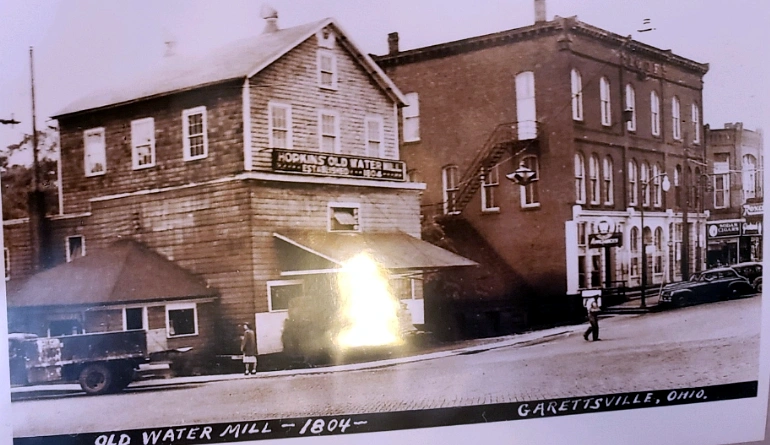
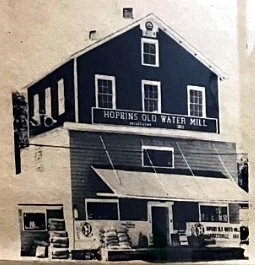
Robert C. Hopkins and his son in law Bruce Ginther finish the rebuild, add the third floor, and install new machinery. Under the Hopkins Old Water Mill name, the building becomes a regional brand for stone ground flour.
The wheel stops
A stormy winter and New Year’s rain washed out an entire side of the mill race. It was too cold to pour concrete, so Ginther wired the mill for electricity. A year later the transformers went in and the water mill became an electric one, though the wheel stayed.
The Tushar family’s dream
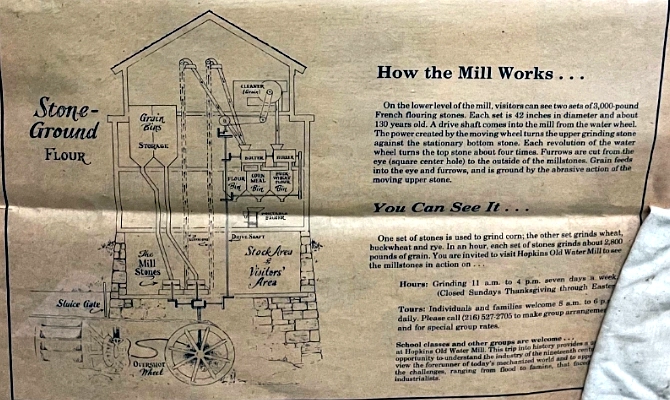
Charles Tushar and his three sons, Mike, Phil, and Jeff, buy the mill to restore it. They run it as a working, visitable grist mill: two sets of 3,000 pound French millstones, each 42 inches across and about 130 years old, one set for corn and one for wheat, buckwheat, and rye. School groups and families come to watch the stones turn.
Garrett’s Mill
Robert Andrews Jr. gives the building back its original name. An ice cream shoppe opens downstairs in 1990, followed by a wine and gift shop in 1993.
The brewery arrives
Garrett’s Mill Brewing Company & Pub opens in June 1995, the first beer brewed on the site. Restaurants come and go over the following years, including Alessi’s Restorante and The Mill.
Restaurant: Impossible
Robert Irvine and the Restaurant: Impossible crew renovate the main dining room in 2019, preserving the original beams and mill features, then return in 2020 to redo the ice cream shop overlooking the falls.
Historic mill. Restaurant. Brewery. Ice cream. Waterfall destination.
And for the first time, the chance to own it.
How the mill worked
Water from the sluice gate turned an overshot wheel on the lower level. A drive shaft carried that power up to the millstones, and each turn of the wheel spun the top stone about four times. Grain fed through the square hole in the center of the runner stone, was ground between the furrowed faces, and came out the edges as meal. Each set of stones could grind about 2,600 pounds of grain an hour.
Garrett’s Mill has survived a founder’s death, two rebuilds, an arson fire, and a flood. Every owner for 220 years has found a reason to keep it going. The next one gets to write the next chapter.
Request the full property information
Request the full property package or schedule a private tour, and Lauren will follow up directly.